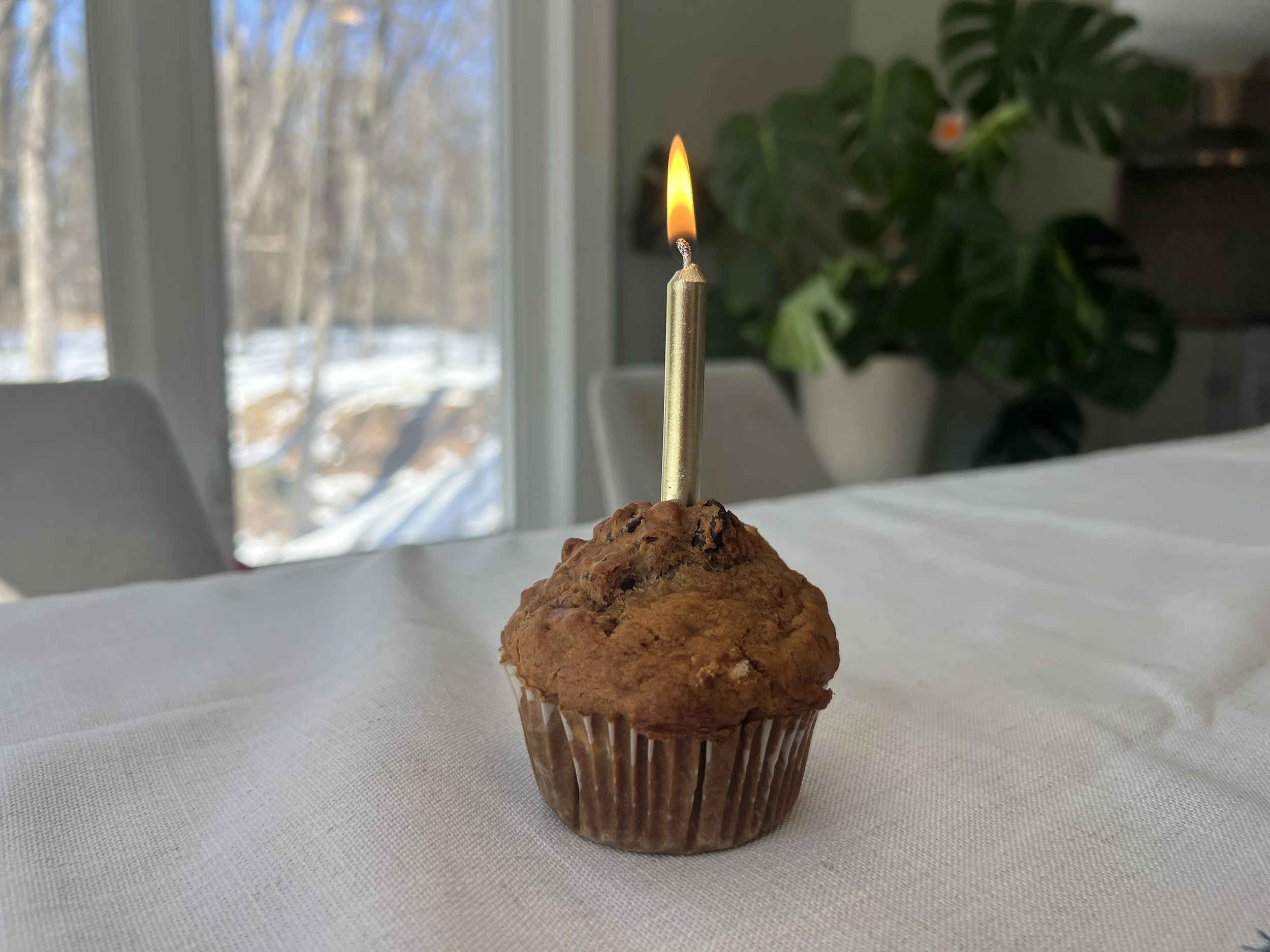
One of the birthday treats.
We recently celebrated a birthday for one of our children, and somewhere between the mad dash to wrap presents and run last-minute errands, it struck me how easy it is to see growth when you’re watching it unfold in real time.
With kids, the phases, even the challenging ones, are easy to understand. The frustration, the awkward attempts, the emotions, all of it makes sense because they are growing. So much is changing around them, and within them, that it all feels expected.
Children are constantly becoming something new.
As adults, especially as leaders, we expect far less of that kind of change.
At first glance, it makes sense. We have experience. We’ve navigated complexity before. We’ve earned some stability and even some success. We assume maturity should mean fewer missteps and smoother outcomes.
But along the way, we develop default settings.
We learn how we prefer decisions to be made. How we respond to tension. What the right course of action is. And if those defaults produce results, they become reinforced.
Success is a powerful validator.
The problem is not that our instincts are wrong. It's that success can turn them into hardened truths.
As children, growth is non-negotiable. Parents push. Teachers challenge. Coaches demand adjustment. Their world changes so quickly that fixed patterns don't stand a chance.
As adults, especially successful ones, no one is standing over us insisting we adapt.
If your decisiveness has worked, if carrying more than your share has built momentum, there is very little immediate incentive to do it differently.
Until it doesn't.
When faced with a tense conversation, a plateauing result, or muted resistance in the room that can’t be ignored, it’s far easier to rely on what has worked before than to ask whether it still fits.
Children evolve because they must.
Adults evolve only if they choose to.
The version of you that built the last chapter, the decisive, independent, self-reliant one, may be exactly the version that now needs refinement, not because it was wrong, but because what once worked on instinct now requires choice.
And that is far more uncomfortable than we expect.