The Gap: What You Say Matters and What Actually Does
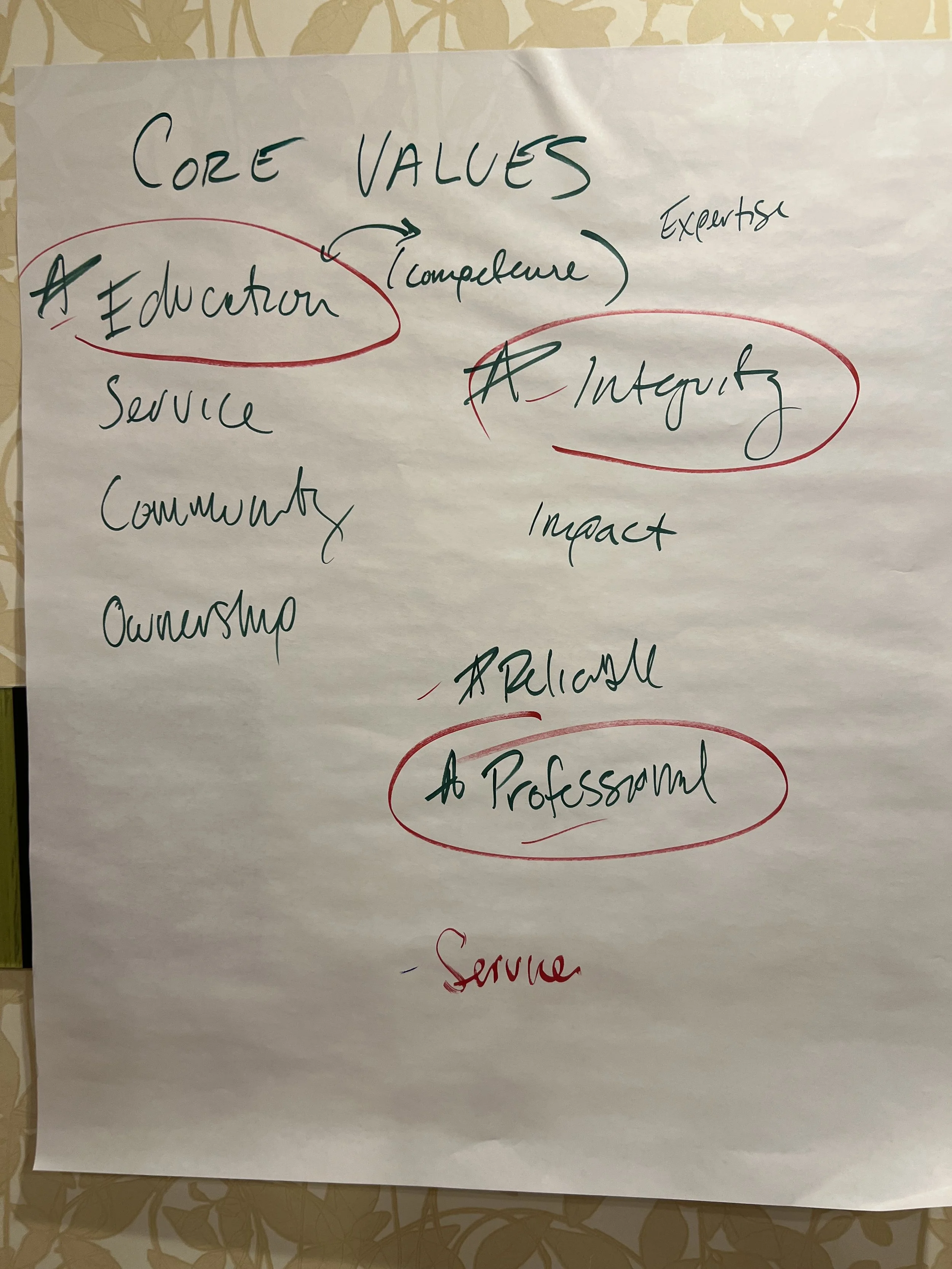
Your values are more than words written on the wall.
Most leadership teams can tell you what their values are.
Ask directly, and the answers come quickly.
Accountability. Ownership. Client focus. Integrity.
The labels are rarely the issue.
The issue is what happens in the decisions. The small ones, made under pressure, when those words aren’t on the wall in front of them.
A strong performer operates outside the standard, but remains, because replacing them feels harder than addressing it.
A commitment is missed, and the response becomes an explanation rather than ownership. Nothing meaningfully changes.
Decisions move upward. Not by design, but because ownership was never clearly defined.
None of these feels like a significant choice in the moment.
They feel practical.
Over time, they become the pattern.
Values don’t live in what’s written.
They live in what’s rewarded, tolerated, and decided.
Not in the language. In the pattern.
Most teams aren’t operating from different values.
They’re operating from different interpretations.
One leader hears “accountability” and thinks ownership of outcomes.
Another thinks responsiveness.
Someone else applies it situationally, dependent on who’s involved or what’s at stake.
Nobody’s wrong.
But nobody's working from the same definition either.
Issues that were thought to be resolved keep resurfacing.
Decisions get revisited.
Strong people feel friction they can't quite put their finger on.
Leaders repeat expectations they believed were already clear.
The business starts to feel inconsistent in ways that don't match the people or the intentions behind it.
From the outside, it starts to look like a people issue.
A lack of accountability. An ownership problem. A team that isn’t quite aligned.
What matters hasn’t been defined clearly enough to guide behavior when it actually counts.
The gap between what you say matters and what actually does, reveals itself in small decisions. Over time, it becomes the operating standard.
The question isn’t whether the gap exists.
It’s whether you’ve made it visible enough to do anything about it.
Most haven’t. Not because they don’t care.
Because it’s been easier to keep moving than to stop and look.
Until it isn’t.