Three Reactions to the Same Sentence
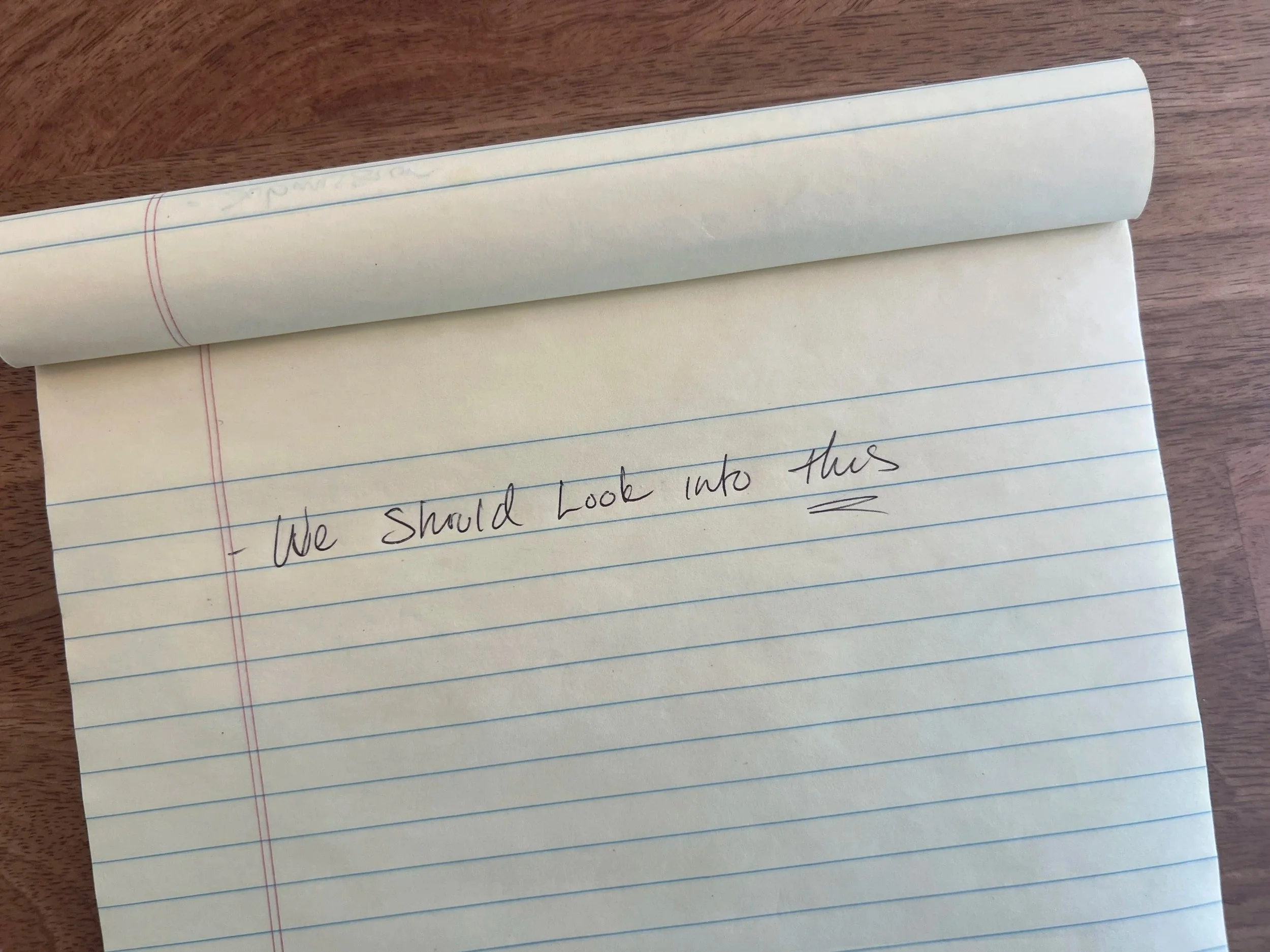
Take note - We should look into this.
It wasn’t dramatic. No one was upset. On the surface, the discussion was perfectly reasonable, the kind of exchange that happens every day inside organizations trying to make progress.
Someone referenced a number that had shifted slightly. Nothing catastrophic, but enough to change the temperature in the room.
One person immediately began outlining how the team should respond. Another assumed it was something to monitor for the next quarter. A third didn’t react at all, because from their perspective, the issue was tied to something else entirely.
One piece of information. Three different reactions.
For a moment, it might have looked like disagreement or a lack of ownership. But the longer the conversation unfolded, the clearer the real issue became.
Everyone in the room was operating from a slightly different version of the story.
Not because anyone was careless or uninformed, but because each person brought a different context. The person who immediately began outlining a response understood the history of the metric and how volatile it had been before. The one who assumed it was something to monitor had only seen the last few quarters and interpreted the shift as something new but not yet urgent. And the person who didn't react at all knew the number mattered, but didn't yet understand why.
From where each person sat, their reaction made perfect sense.
Yet those small differences compound quickly.
A decision made on incomplete context moves one direction. A decision made on a different interpretation moves another. Someone else waits, assuming the first two must already understand something they do not.
From the outside, it begins to look like confusion, hesitation, or dysfunction.
Most of the time, it isn't.
It's the gap between what one person knows and what everyone else assumes they know.
Experience tends to widen that gap more than we realize.
The more familiar we become with a problem, the easier it is to skip steps when explaining it. We move straight to the decision because the reasoning feels obvious to us, forgetting that the path to that conclusion was built over years of context, conversations, and experience that others may not share.
People begin acting on slightly different versions of the same information.
No one is wrong. No one is acting irresponsibly. But the organization starts pulling in different directions because the picture in everyone's mind isn't quite the same.
Leaders often try to correct this by pushing harder. They ask for more ownership, faster decisions, and clearer accountability.
But effort rarely solves a context problem.
The leaders who learn to notice this dynamic begin doing something slightly different. They slow down just enough to explain how a decision was reached, what factors matter most, and which assumptions it rests on.
That extra layer of context can feel unnecessary in the moment. Everyone in the room appears to understand. The conversation feels clear enough to move forward.
Shared language is not the same as shared understanding.
When context is missing, the organization fills the gaps on its own.
Most confusion inside organizations doesn’t begin with bad decisions or poor effort.
It begins when people start acting on slightly different versions of the same information.
By the time the friction becomes visible, the moment that created it is usually long forgotten.
In a sentence that everyone assumed was clear.